


The real sustainability problem in your closet isn't the material — it's the replacement cycle
Most people who want to organize their homes more sustainably start by looking at what things are made of. Bamboo shoe racks. Recycled cardboard bins. Natural fiber baskets. It feels like the right instinct. But there's a more honest question worth asking first: how long does this thing actually last?
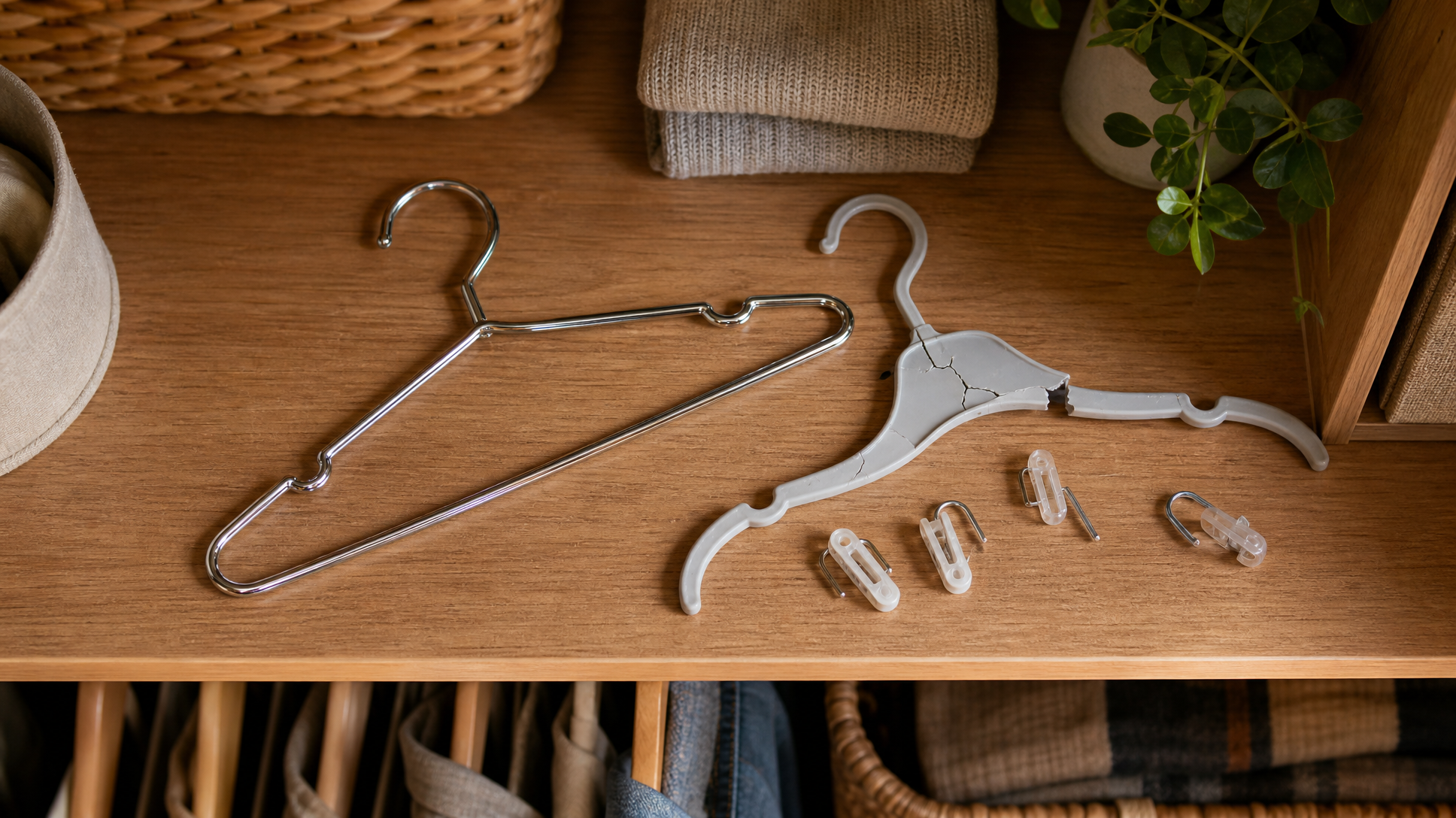
A chrome alloy steel hanger that holds its shape for ten years has a dramatically lower environmental and financial cost than three rounds of thin plastic hangers that crack under a heavy coat, warp in a warm closet, and end up in a landfill. The material matters less than the replacement cycle. And most of us replace cheap organization products far more often than we realize.
The hidden cost of 'good enough for now'
Here's how the math typically plays out. You grab a pack of lightweight plastic hangers because they're cheap and you need them now. They work fine for a few months. Then one snaps. Then a few more. By the time you've replaced them twice, you've spent more than you would have on a single set of quality metal hangers — and sent two batches of plastic to the trash.
The same pattern plays out with shoe racks. A flimsy wire rack that bends under the weight of boots, or a plastic-jointed one that wobbles until it collapses, gets replaced. Then replaced again. Each replacement costs money, costs time, and generates waste. None of that shows up in the original price tag, which is exactly why 'affordable' and 'cheap' aren't the same thing.
This is what the sustainable home organization conversation misses when it focuses only on eco-friendly materials: a product made from recycled cardboard that lasts eight months is not more sustainable than a steel rack that lasts eight years, even if the cardboard sounds greener on paper.
What 'buy once' actually requires
Buying once — and meaning it — demands a specific kind of product. It has to handle real load without bending. It has to stay functional after being assembled, disassembled, and moved. It has to resist the ordinary wear of a busy household: heavy winter coats, wet boots, overstuffed suitcases.
That's why the materials that genuinely hold up in home organization tend to be things like alloy steel, chrome finishes, and non-slip coatings — not because they're trendy, but because they're engineered to take repeated use without degrading. A non-slip coating on a hanger means garments don't slide off and get crumpled on the floor, which also means you're not fighting your own storage system every morning.
Folding and adjustable designs add another layer of durability value. A luggage rack that folds flat when not in use doesn't get knocked around and bent out of shape. A shoe rack with slide-and-adjust tiers can grow with your collection instead of being replaced when your needs change. Adaptability is its own form of longevity.
Durable vs. disposable: a direct comparison
It helps to lay this out plainly, because the upfront price difference can make durable products feel like the less practical choice.
- Disposable-cycle products (lightweight plastic hangers, flimsy wire racks, cardboard organizers): low upfront cost, but frequent replacement — often every one to three years. Each replacement adds to landfill waste and resets your spending. You also spend time re-buying, re-assembling, and reorganizing.
- Durable, buy-once products (alloy steel hangers, chrome shoe racks, steel luggage racks with rubber feet and nylon straps): higher upfront cost, but a lifespan measured in years or even decades with normal use. One purchase, one assembly, and the job is done.
The financial crossover point — where the durable option has cost less in total — typically arrives faster than people expect, often within the first replacement cycle of the cheaper alternative. After that, the durable product is essentially free compared to what you'd have spent continuing to replace the cheaper version.
And the waste comparison isn't close. Multiple rounds of cracked plastic hangers or collapsed wire racks add up to a meaningful amount of material heading to a landfill, none of which is easily recyclable in standard curbside programs.
The clutter angle nobody mentions
There's a secondary cost to the replacement cycle that doesn't show up in any spreadsheet: the clutter of broken and half-working organization products. A closet with two bent hangers, a shoe rack missing a peg, and a luggage rack that lists to one side isn't organized — it's just contained chaos. You end up managing the failures of your storage system instead of actually using it.
Durable products that work the way they're supposed to, consistently, remove that friction entirely. Your closet stays organized because the hardware holds. That's the practical payoff of building your home organization around things that last.
For a broader look at how the right storage hardware changes the day-to-day feel of a home, this guide to clutter-free living covers the fundamentals worth knowing.
The bottom line on sustainable home organization
Sustainable home organization isn't really about finding the greenest-sounding material. It's about buying things that don't need to be replaced. That means choosing products engineered for real load, real use, and real households — not products priced for a single season.
Buy fewer things. Buy them once. Make sure they're built to hold up.
USTECH's line of chrome alloy steel hangers, multi-tier shoe racks, and folding luggage racks is built around exactly that idea — durable hardware that does its job for years, not months. See the full range at ustech-usa.com and find the pieces that belong in a closet you won't have to reorganize next year.
Frequently Asked Questions
Are metal hangers and steel shoe racks actually more sustainable than plastic or bamboo alternatives?
Sustainability depends more on lifespan than material. A steel or chrome product that lasts a decade generates far less waste and total cost than a bamboo or plastic product replaced every year or two. The environmental footprint of manufacturing is amortized over a much longer useful life when a product is genuinely durable.
How do I know if a home organization product will actually last, before I buy it?
Look at the construction materials (alloy steel and chrome finishes hold up better than thin wire or lightweight plastic), the joint and connection design (rubber feet and nylon straps on a luggage rack, for example, resist wear better than bare metal-on-floor contact), and whether the product has adjustable or folding features that reduce stress on fixed joints over time. Products with non-slip coatings and reinforced structural points tend to outlast simpler, cheaper versions significantly.
Is it worth paying more upfront for durable organization products if I'm on a budget?
Usually yes, because the total cost over time is lower. The key is calculating cost per year of use rather than sticker price. A product that costs more but lasts five times longer is the budget-friendly choice in practice — you're just paying the full amount upfront rather than in installments disguised as replacements.
What happens to plastic hangers and wire racks when I throw them away?
Most plastic hangers and thin wire racks are not accepted by standard curbside recycling programs because of their mixed materials and small size. They typically go to landfill. This is part of why the replacement cycle of cheap organization products carries a real environmental cost that isn't visible at the point of purchase.


