


The Entryway Always Loses
You didn't plan for the shoes to end up there. It just happened — one pair by the door became three, then six, then a full-on obstacle course every time someone walks in. The entryway is the first place clutter wins, and it wins because most homes don't give it a fighting chance.
The real issue isn't that you own too many shoes. It's that the floor is the only surface anyone thought to use. Once you stop treating the floor as the default and start thinking vertically, even the tightest entryway has more room than it looks.
Why Tight Entryways Are Actually Workable
A narrow entryway feels impossible until you map it out. The gap between your door and the wall? Often 12 to 18 inches — enough for a slim shoe rack to slide right in. The wall beside the coat closet? Probably empty from floor to hip height. These are the pockets most people overlook because they're thinking about furniture, not storage.
The goal is to use height instead of footprint. A rack that stacks shoes in tiers takes up roughly the same floor space as two or three pairs laid flat — but holds many more. That trade-off is the whole game in a small entryway.
Storage Configurations That Actually Work
Go Vertical With a Multi-Tier Rack
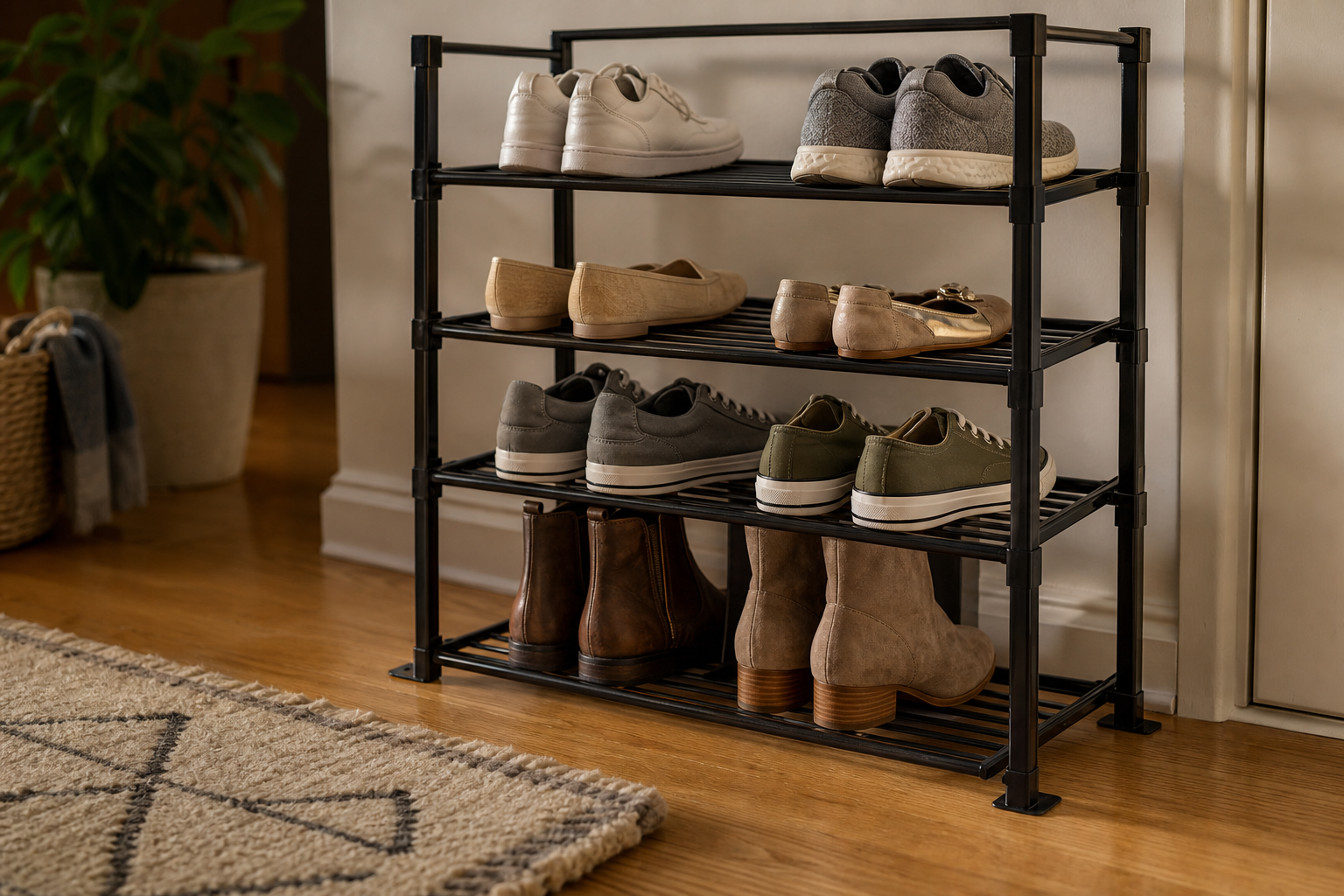
A tiered shoe rack is the most straightforward fix. Instead of shoes sprawling outward, they stack upward. A 5-tier rack in a corner or against a blank wall can organize a surprising number of pairs while keeping the floor mostly clear. Look for racks with adjustable tier heights — different shoes (boots, sneakers, flats) have very different profiles, and a one-size shelf spacing wastes the space between tiers.
USTECH's 5-Tier Shoe Rack with Slide-n-Adjust is built around exactly this idea: the tier spacing slides to fit whatever you're storing, so you're not stuck with gaps above low flats or cramming boots into a shelf that's too shallow.
Use the Door-to-Wall Gap
Measure the space between your front door (when open) and the nearest wall. If you haven't done this, do it now — you'll probably find more room than expected. A narrow, upright rack fits here without blocking the door swing or the walking path. It keeps shoes out of the main entryway sightline and right where people take them off.
Think in Zones, Not Piles
Even in a small space, assigning zones makes a real difference. Everyday shoes — the ones worn most — go on the most accessible tier. Seasonal or less-used pairs go higher or lower. This sounds obvious, but most entryway shoe piles fail because everything gets treated as equally urgent. When the most-reached-for shoes have a designated spot, the pile doesn't re-form.
Don't Ignore the Wall Beside the Door
The strip of wall right next to the door frame — inside or outside — is almost always unused. A slim rack here keeps shoes close to the exit without blocking the entryway itself. If the space is very narrow, look for an X-frame or angled-shelf design that doesn't project far from the wall.
What to Avoid
A wide, flat shoe bench looks great in a large foyer. In a tight entryway, it just becomes another surface that collects clutter — jackets on top, shoes underneath in a pile anyway. If you're short on space, prioritize vertical storage over a storage bench unless the bench is genuinely narrow and the under-shelf is structured (not open).
Also avoid racks that require you to remove every shoe to get to the pair at the back. In a busy household, anything that requires effort gets abandoned fast. Angled or tiered designs where each pair is individually accessible make the system stick.
The Closet Overflow Problem
Sometimes the entryway pile isn't just about the entryway — it's overflow from a closet that ran out of room. If your bedroom or hallway closet is also at capacity, a coordinated approach helps: a tiered shoe rack in the entryway for daily-wear shoes, and better hanger organization inside the closet to free up floor space for seasonal pairs. Getting one area under control tends to have a ripple effect on the rest of the home.
If you're thinking about the full picture — not just shoes but the whole closet — our post on creating a clutter-free home covers the broader strategy worth reading alongside this one.
Start With One Rack, Not a Full Renovation
You don't need to overhaul the entryway to fix the shoe problem. One well-chosen, adjustable rack placed in the right spot does more than a weekend of reorganizing without the right tools. Measure your space, pick a rack that fits the actual footprint you have (not the one you wish you had), and let the vertical storage do the work.
The floor is for walking. Give the shoes somewhere else to be.
See USTECH's adjustable shoe racks built for tight spaces at ustech-usa.com — designed to fit real entryways, not showroom ones.
Frequently Asked Questions
How do I figure out what size shoe rack will fit my entryway?
Measure the width, depth, and height of the spot you're targeting before buying anything. Pay attention to the depth especially — a rack that sticks too far into a narrow hallway creates a new obstacle. Also measure the door swing if you're placing the rack near the door, so it doesn't block the path when the door opens.
How many pairs of shoes does a 5-tier rack typically hold?
It depends on the width of the rack and the size of the shoes, so there's no single answer that applies to every rack. Generally, a wider rack with five tiers can hold considerably more pairs than a narrower one. Check the product specs for the specific rack you're considering — capacity is usually listed there.
Are adjustable shoe racks worth it over fixed-shelf ones?
For most households, yes. Fixed shelves are designed around an average shoe height, which means boots get squeezed and flats leave wasted space above them. Adjustable tiers let you configure the rack around what you actually own, which means you fit more in the same footprint. If your shoe collection is mixed — different heel heights, boots alongside sneakers — adjustable shelving pays off quickly.
What's the best way to keep a shoe rack organized once it's set up?
The most reliable approach is to assign tiers by frequency of use: everyday shoes at the most accessible level, and less-used pairs higher or lower. When every shoe has a designated spot (not just "somewhere on the rack"), it's much easier to put things back correctly. A quick weekly tidy — returning any strays to their tier — takes about two minutes and keeps the system working.


