


Most people inherit their hanger situation rather than choose it. A few wire ones from the dry cleaner, some flimsy plastic from a bulk pack, maybe a wood-look set someone gifted years ago — and suddenly your closet is a chaos of different heights, widths, and thicknesses that makes getting dressed feel like a chore.
The problem isn't just aesthetic. The wrong hanger for the wrong garment leaves shoulder bumps in knitwear, creases in dress shirts, and strappy tops that end up on the floor every other morning. Choosing the right hanger type is one of the simplest, most overlooked ways to actually protect the clothes you've spent money on.
Here's a straight comparison of the three hanger types you'll find in most American homes — and what each one actually does for (or to) your wardrobe.
The Problem With Cheap Plastic Hangers
Standard thin plastic hangers are everywhere because they're cheap and lightweight. But lightweight is the problem. They flex under anything heavier than a T-shirt, which means jackets and coats slowly stretch the shoulder seams outward over time. The narrow shoulder profile — often barely an inch wide — concentrates all the garment's weight on one thin ridge, leaving those telltale bumps on knitwear and structured blazers.
They also slide. Silky fabrics, strappy tops, and lightweight blouses slip right off, especially if your closet rod has any angle to it. And because they're all roughly the same flimsy shape, they don't do anything to help a suit jacket or coat keep its form between wearings.
For folded basics like gym clothes or casual tees, thin plastic hangers are fine. For anything you care about? They're working against you.
What Wood-Look Hangers Actually Get Right
Real wooden hangers have a good reputation for a reason: the wider, contoured shoulder profile distributes a garment's weight more evenly, which helps structured pieces — suits, blazers, coats — hold their shape. The heft of the hanger itself keeps heavier garments hanging plumb rather than slumping to one side.
The catch with traditional wood is the weight and the environmental cost of sourcing solid timber at scale. That's where a newer generation of wood-look hangers made from eco-friendly bioplastic changes the equation. USTECH's Wood-Like Eco-Friendly Bowed Shaped Hangers, for instance, use a bioplastic frame that mimics the look and structural feel of wood without the raw material overhead. The bowed shape is specifically designed to maintain garment form — particularly useful for suits and coats that need to keep their chest and shoulder structure between wears.
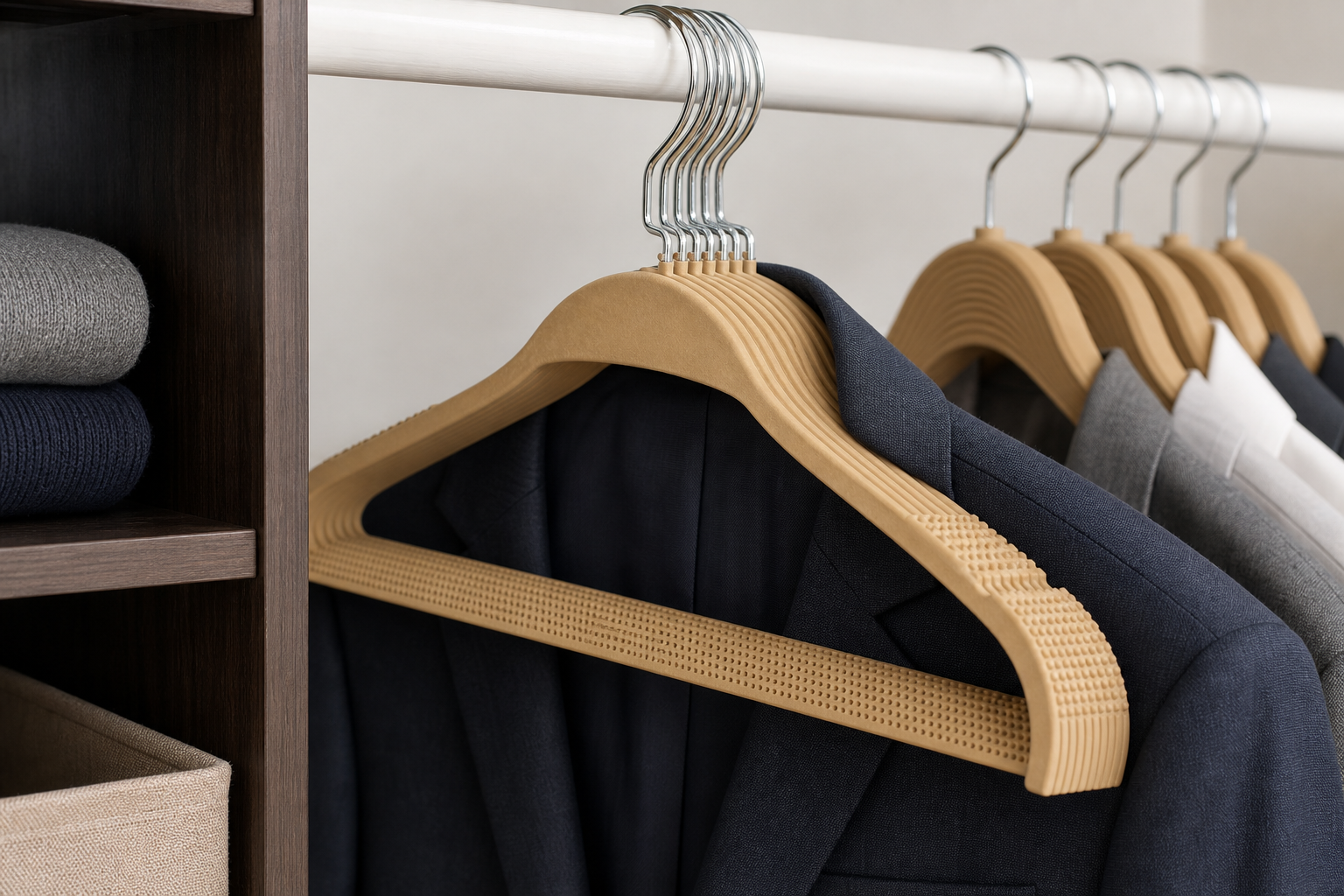
The ribbed borders and shoulder notches on these hangers do real work too: strappy dresses and camisoles that would slide off a plain plastic hanger stay put. The 360° rotating, anti-rust chrome hook means you can spin a garment to face any direction without removing it from the rod — a small thing that adds up quickly when you're getting dressed in a hurry. Smooth edges and corners mean no snags on delicate fabrics.
For anyone building a closet that looks organized and keeps clothes in good condition, wood-look hangers with a contoured profile are the most versatile all-rounder. They handle suits, coats, dresses, and structured tops equally well.
Non-Slip Coated Hangers: The Right Tool for the Right Job
Non-slip or rubberized-coating hangers — sometimes called velvet-style — solve one specific problem extremely well: keeping lightweight, slippery garments on the hanger. Silk blouses, satin camisoles, off-shoulder tops, and anything cut on the bias will stay put on a textured surface in a way they simply won't on smooth plastic or even wood.
They're also ultra-slim, which makes them the best choice when closet space is genuinely tight. You can fit significantly more garments on the same rod length compared to wood-look or standard plastic hangers.
The trade-off: they're not ideal for heavy garments. A thick winter coat or a structured suit jacket needs the wider shoulder profile of a wood-look or solid wood hanger to maintain its shape. Hanging heavy pieces on slim non-slip hangers long-term can distort the shoulder — the same problem as cheap plastic, just in a different way.
Side-by-Side: Which Hanger for Which Garment
- Suits and structured blazers: Wood-look bowed hangers. The contoured shoulder and heavier frame keep the chest and shoulders from collapsing.
- Winter coats and heavy outerwear: Wood-look or solid wood. Weight distribution matters most here.
- Silk, satin, and strappy tops: Non-slip coated hangers, or wood-look hangers with shoulder notches. Either keeps them from hitting the floor.
- Dresses (casual to formal): Wood-look with notches for anything with straps; non-slip for lightweight fabrics.
- Everyday T-shirts and casual tops: Thin plastic works fine — save the better hangers for garments that need them.
- Maximizing a small closet: Non-slip slim hangers give you the most garments per foot of rod space.
The Honest Answer
There's no single hanger that does everything perfectly — but most closets only need two types, not five. A set of wood-look bowed hangers for your structured and heavier garments, and a set of slim non-slip hangers for your lightweight and slippery ones, covers nearly every wardrobe situation. Retire the thin plastic ones to the laundry room or the donation pile.
The goal isn't a perfectly matching closet for its own sake. It's a closet where clothes come out looking the way they went in — shoulders intact, fabric unmarked, nothing on the floor.
If you want to dig deeper into building a genuinely organized closet from the ground up, this guide to clutter-free home organization covers the broader picture beyond just hangers.
Ready to make the switch? Browse USTECH's hanger collection and find the right match for your wardrobe — whether you're outfitting a single closet or doing a full household refresh.
Frequently Asked Questions
Are wood-look plastic hangers as strong as real wooden hangers?
High-quality wood-look hangers made from durable bioplastic or heavy-duty plastic composites can handle suits and coats without bending or breaking — the key is the construction quality, not whether the material is literal wood. Look for a bowed or contoured profile and a heavy-duty finish rather than judging by appearance alone.
Will velvet or non-slip hangers damage delicate fabrics?
Generally, no — the textured surface grips fabric rather than snagging it, and most non-slip hangers are designed with smooth edges for that reason. That said, extremely delicate or loosely woven fabrics (like open-knit sweaters) are better stored folded than hung on any hanger, since the weight of the garment itself can cause stretching over time.
How do I get rid of shoulder bumps that hangers have already caused?
For most knitwear, lightly dampening the affected area and gently reshaping it with your hands, then laying it flat to dry, can reduce the bump. A garment steamer can also help relax the fibers back into shape. Switching to wider, contoured hangers going forward prevents the problem from recurring.
Is it worth replacing all my hangers at once, or should I do it gradually?
Doing a full swap at once gives you a uniform closet that's genuinely easier to use — matching hangers mean consistent garment height, which makes scanning your wardrobe faster. That said, starting with your most-worn or most-valuable garments (suits, coats, delicate tops) and replacing the rest over time is a perfectly reasonable approach if you're working with a budget.


