


The reorganization trap most people fall into
You spend a Saturday folding everything perfectly, fitting neat stacks into drawer dividers, and stepping back satisfied. Three weeks later, the drawer looks like a laundry pile again. Sound familiar? The problem usually isn't your discipline — it's that you picked the wrong storage method for your garments and your habits.
Drawer organizers and open-rack systems both work. Just not for the same things, and not for the same people. Getting that match right is what separates a closet that stays tidy from one you're constantly resetting.
What drawer organizers actually do well
Drawers are excellent at containing small, flat items that don't wrinkle easily and don't need to be seen to be chosen. Think socks, underwear, folded T-shirts, and gym wear. When you file-fold these into a divided drawer, you can see everything at a glance, grab one item without disturbing the rest, and close the drawer so dust and visual clutter disappear.
The real advantage of a drawer is containment. Nothing migrates. Nothing falls off a shelf. For households with kids or anyone who moves quickly through a morning routine, that physical barrier matters.
But drawers have a ceiling. Heavier knits get misshapen when stacked too deep. Anything that needs to breathe — linen trousers, structured blazers, dress shirts — comes out of a drawer creased and looking lived-in before you've worn it once. And the deeper the drawer, the more likely items at the bottom stop existing in your mind entirely.
Where open-rack systems outperform drawers
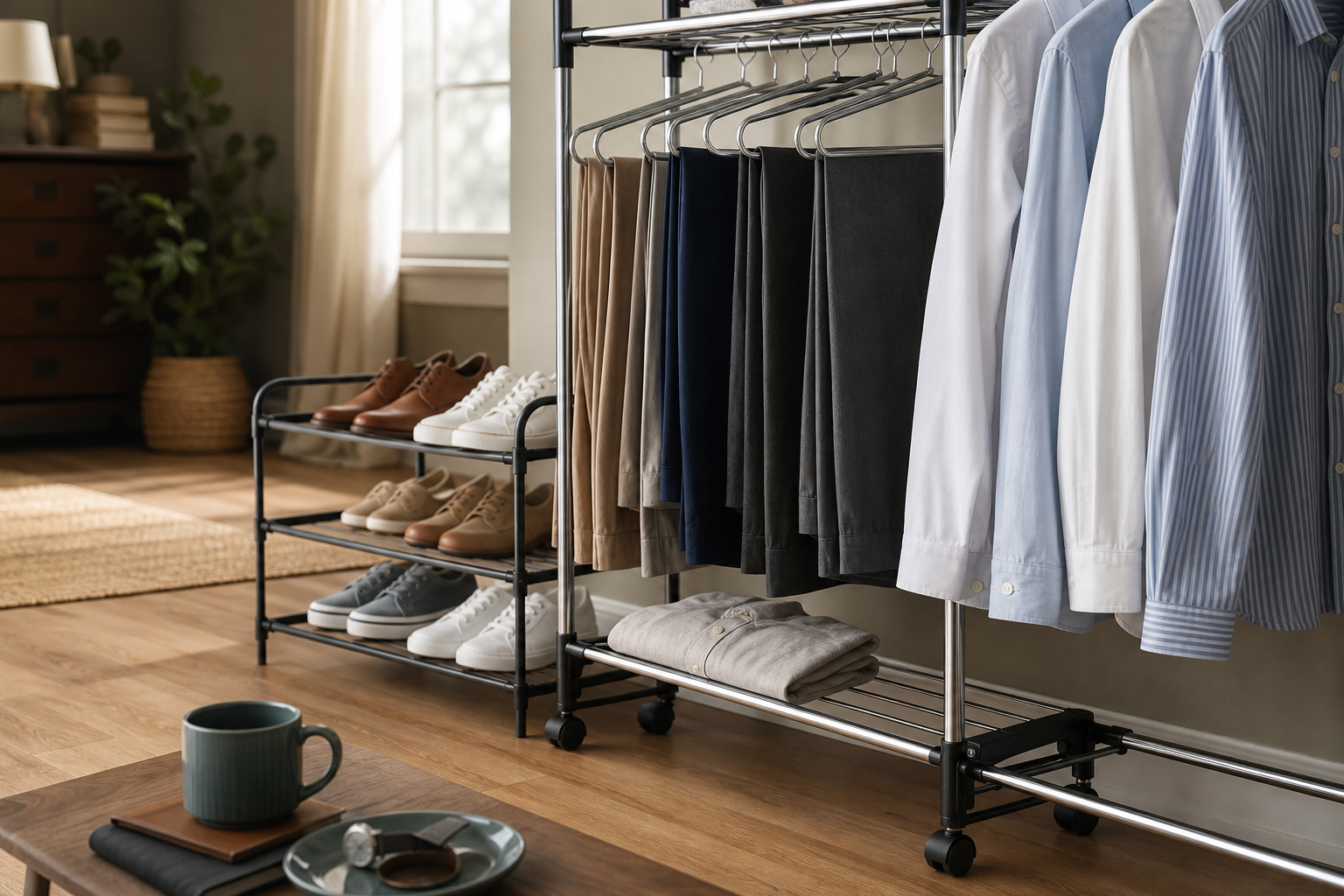
Open racks — tiered hangers, multi-bar closet systems, swing-arm pant racks — win on visibility and garment care. When a piece of clothing is hanging or resting on an open tier, you can see it, reach it, and return it without disrupting anything else. That frictionless access is why open systems tend to stay organized longer in practice, even if they look less tidy in theory.
Hanging storage is especially effective for:
- Pants, jeans, and trousers that crease when folded
- Blouses, button-downs, and anything with structure
- Frequently worn items you cycle through daily
- Garments that need airflow to stay fresh between wears
The other underrated benefit: putting clothes away is faster. Hang it, done. No refolding, no restacking, no trying to slide something into a full drawer without wrecking the row next to it. For busy households, that lower barrier to returning items is what actually keeps the system intact.
The honest trade-offs
Open racks do collect dust faster than drawers, and they require a bit more floor or closet-rod space. If your bedroom or entryway is genuinely cramped, a multi-tier rack needs to earn its footprint — and it usually does, because it consolidates what would otherwise be spread across a chair, a hook, and the floor.
Drawer systems, on the other hand, require consistent refolding to stay functional. If you're the type who pulls things out in a hurry and tosses them back loosely, the neat stacks collapse within days. That's not a character flaw — it's just a mismatch between the system and the behavior.
A simple rule for deciding which one to use
Ask one question about each garment category: Do I fold this, or do I hang it?
If you naturally hang it after wearing, it belongs on a rack. If you naturally fold it, it belongs in a drawer. Fighting that instinct — forcing yourself to fold pants you always hang, or hang T-shirts you always fold — is exactly why reorganization sessions don't stick.
For most wardrobes, the real answer is both, used deliberately. Drawers for the fold-and-forget category (basics, undergarments, activewear). Open racks and tiered hanger systems for everything you reach for regularly and care about the condition of.
Getting the most out of open-rack storage
The difference between an open rack that stays organized and one that becomes a dumping ground is usually the hardware. Hangers that slip, bend, or crowd together make it harder to return items neatly — so you stop bothering. Features like shoulder notches, non-slip coatings, and pant bars make it genuinely easier to hang things correctly, which means you actually do it.
For shoes, a tiered rack with adjustable shelves lets you configure the spacing to fit what you own rather than cramming everything onto fixed levels. For luggage and seasonal bags, a folding rack in a guest room or closet corner keeps them off the floor and accessible without eating permanent space.
If you want a closer look at how these systems fit together for a clutter-free home, this guide covers the full picture.
The goal isn't a perfectly Instagrammable closet — it's a system you'll still be using in six months without having to rebuild it. Pick the method that matches your garments and your habits, and that's exactly what you'll get.
See how USTECH's multi-tier hanger systems, shoe racks, and luggage racks stack up against drawer storage for your wardrobe — browse the full lineup at ustech-usa.com.
Frequently Asked Questions
Are drawer organizers or open racks better for a small bedroom?
It depends on what you're storing. Drawers are better for small items like socks and folded basics because they use vertical furniture space and keep surfaces clear. Open racks work well for frequently worn garments and shoes, especially when a multi-tier design lets you stack upward rather than spread outward. In a small bedroom, a narrow tiered rack can actually reclaim floor space that clothes were previously occupying on chairs or the floor.
Why do my drawer organizers stop working after a few weeks?
Usually because the system requires more effort to maintain than your daily routine allows. If you're refolding and restacking items every time you return them to the drawer, it only takes a few rushed mornings before the whole thing collapses. Drawer organizers work best for items you naturally fold anyway — not for pieces you'd normally hang. Moving frequently worn garments to an open rack reduces the daily maintenance load on your drawers significantly.
What types of clothes should never go in a drawer?
Structured garments — blazers, dress shirts, linen trousers, and anything with defined shoulders — tend to lose their shape when folded and stacked in a drawer. Heavier knits can also stretch or crease under the weight of items stacked on top. These pieces do better on proper hangers with shoulder support, where they can keep their shape and breathe between wears.
Can I use both drawer organizers and open racks in the same closet?
Absolutely — and for most wardrobes, that's the right call. The key is being deliberate about which category goes where. Use drawers for items you fold by habit (basics, underwear, activewear) and open racks for items you hang by habit (pants, blouses, everyday outerwear). Splitting the storage this way means each system only handles what it's actually good at, so both stay functional longer.


